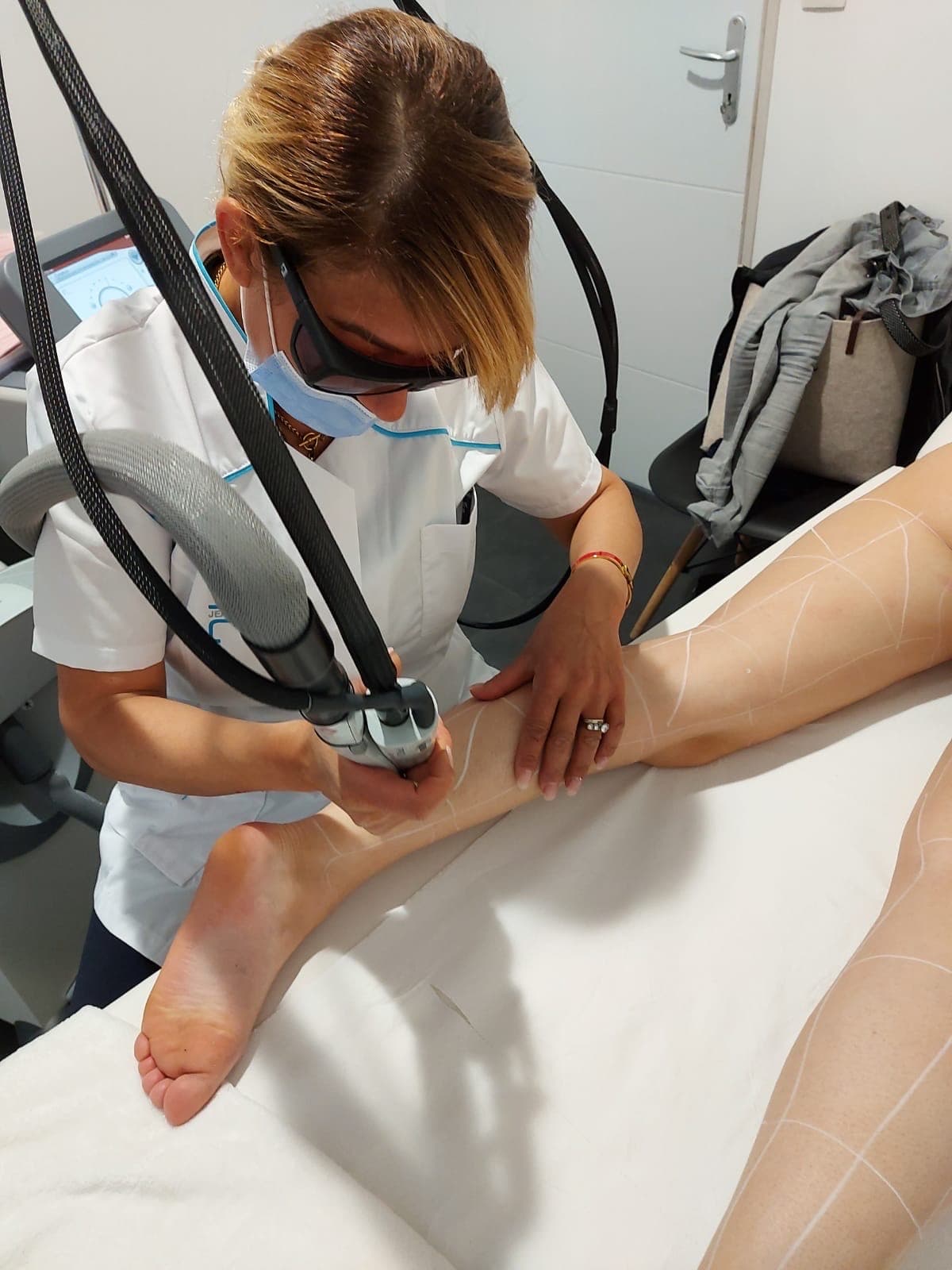
MEDICAL TECHNOLOGY · 810NM DIODEREAL TREATMENT SESSION
Medical laser hair removal is today the most effective way to reduce hair growth for good. Unlike shaving, waxing or plucking, it delivers progressive, lasting results with serious medical supervision.
Razor, wax, pulsed light: every other method leaves the follicle intact. Medical laser is the only one that neutralises it for good.
Regrowth in 1 to 3 days
Cuts the hair at the surface. Immediate regrowth, coarser feel, frequent irritation.
Regrowth in 2 to 4 weeks
Pulls the hair out but leaves the root intact. Recurring pain, ingrown hairs, a never-ending expense.
Slow, inconsistent results
Diffuse light, less powerful and less targeted than laser: results are often incomplete.
Lasting reduction from the first sessions
The beam targets the hair's melanin and neutralises the follicle at the root, with personalised medical settings.
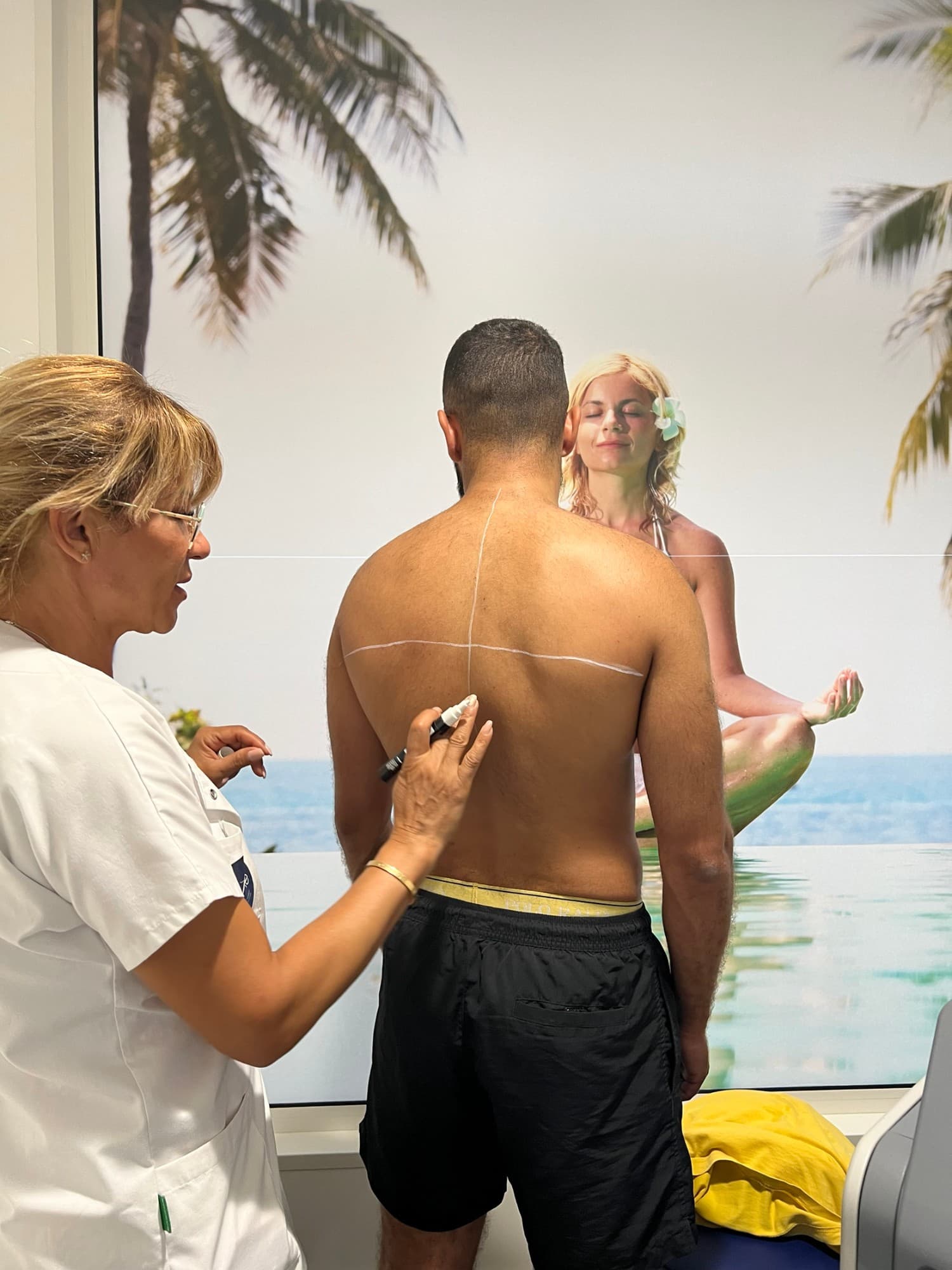
Back, chest, shoulders, beard contouring: male hair growth calls for specific settings and precise area-by-area marking. Nearly half of our patients are men. There is nothing taboo about it, and the result is just as lasting.
See men's pricingThe area is mapped out with a white pencil, section by section, for complete coverage with no misses and no double pass.
Power and frequency adjusted to your phototype, your hair and the treated area.
The cooled handpiece sweeps each section. Brief tingling sensation, very bearable.
Soothing gel and aftercare advice: sun protection, hydration, no plucking between sessions.
A few photos from our patient follow-ups, showing how hair growth evolves over the course of medical laser sessions.
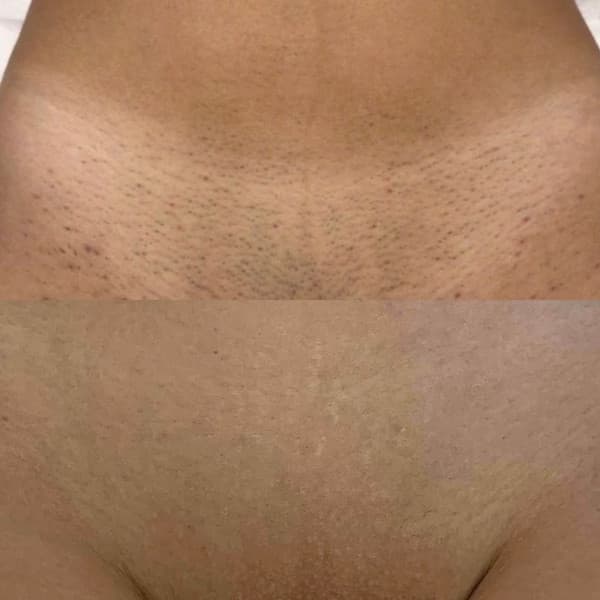
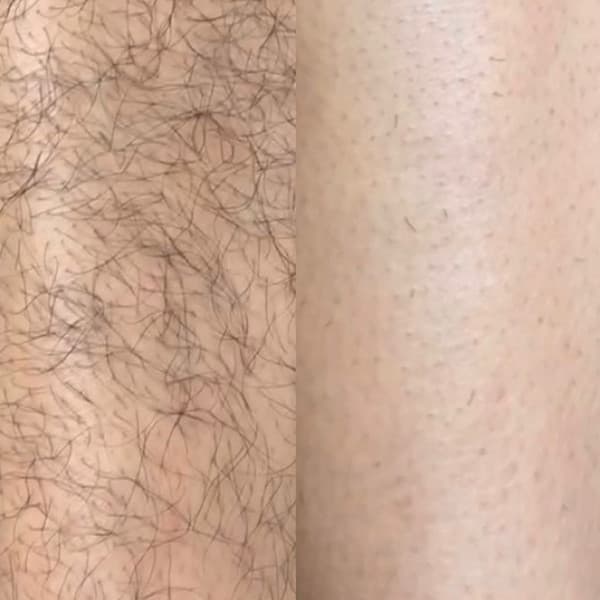
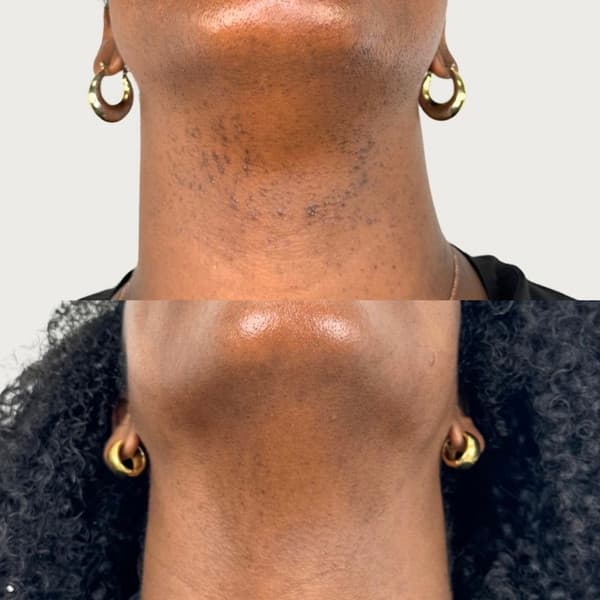
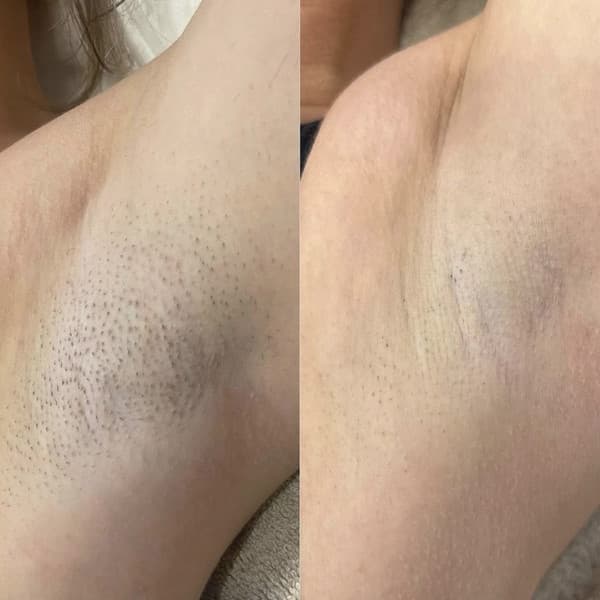
Results vary with the treated area, skin and hair type, and each patient's hormonal balance.
Straight answers, no jargon and no overpromising, just like during the free assessment.
It feels like light elastic-band snaps with some warmth. The handpiece cools the skin during each pulse, and settings are adapted to your sensitivity. On the most sensitive areas, the pass only takes a few minutes.
On average 6 to 8 sessions, spaced 4 to 8 weeks apart depending on the area. The laser only acts on hairs in their active growth phase: this natural cycle is what requires several passes, not any lack of laser efficacy.
Shave the area 24 to 48 hours before the session, avoid sun exposure and self-tanner in the preceding weeks, and do not pull hairs out at the root (wax, tweezers) between sessions: the laser needs the root to work.
The 810 nm diode treats most phototypes, including darker skin, with adapted settings. Very fair, white or red hair, however, responds poorly to laser. We will tell you honestly during the free assessment.
Redness or a local warm sensation may appear for a few hours after the session. This is normal and temporary. Sun protection is recommended on the treated area. The prior assessment rules out any contraindications.